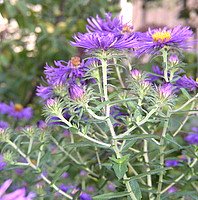
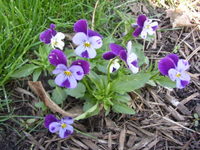
Larval food also includes trees, shrubs, vegetables, wildflowers and weeds.
Keep this in mind when you are landscaping your yard. In fact, you will probably find that you already have caterpillar food somewhere in your garden or yard.
My favorite butterfly to attract using caterpillar food is the Monarch Butterfly.
This is because attracting and
raising monarchs
is so easy and fascinating. I have thoroughly covered the Monarch host plant,
If you are interested in growing milkweed from seed, you can purchase the annual tropical milkweed (Asclepias curassavica) below. It is very easy to grow from seed.
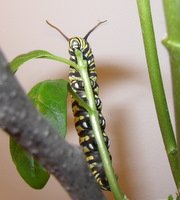
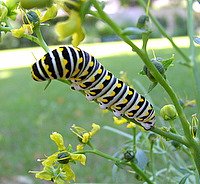
My second favorite butterfly to attract using host plants is the Black Swallowtail. (above right, Swallowtail caterpillar)
Swallowtails are large, beautiful butterflies. (left)
Their slow flight pattern make them easy to observe.
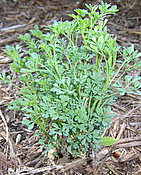
I have used parsley, bronze fennel and common rue or ruta as Butterfly Host Plants for Swallowtails.
Rue (right) is the all time favorite larval food of the Swallowtails in my garden.
I discovered this plant by accident.
It was growing in my front garden......a bird or the wind must have "planted" it.
I didn't know what it was and I was ready to remove it when I noticed it was COVERED with caterpillars...Swallowtail.
Since that discovery, I have found many swallowtail eggs on this plant which I have raised inside.
Rue can irritate the skin when touched (I haven't had a problem with this) and can make you sick if eaten, so be aware of this before planting it.
Interested in trying some Rue in your garden? Check out the links below to try growing seeds or purchasing plants.
Raising swallowtails is a very interesting experience....different from the Monarchs.
Swallowtails have many other host plants including pipevines, pawpaw, citrus trees, dill, carrot, parsnip, Queen Anne's lace, hop tree, spicebush, cherry tree, aspens, willows, ashes, and alders
Here are some other Butterfly Families and their Butterfly Host Plants:


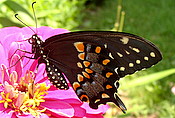 Swallowtails are large, beautiful butterflies. (left)